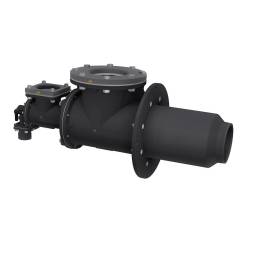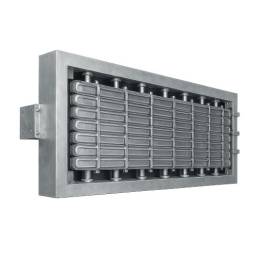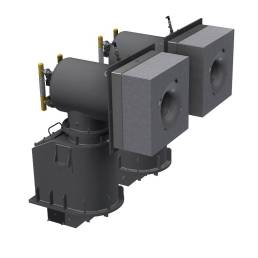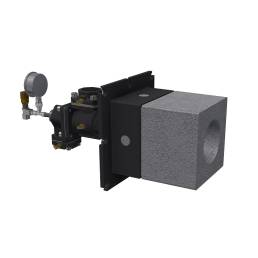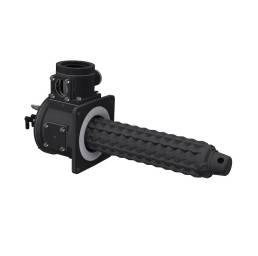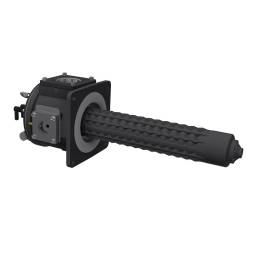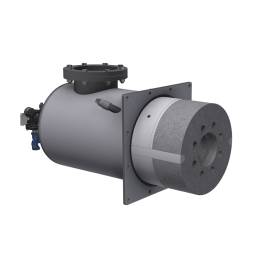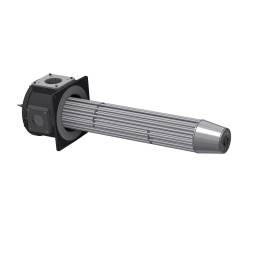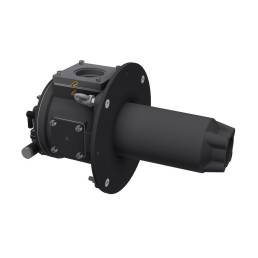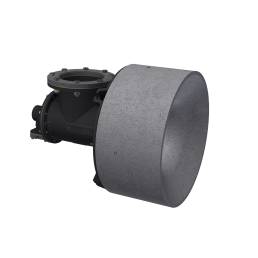


TF - Turn Flame oxy-fuel burners with redirectable flame
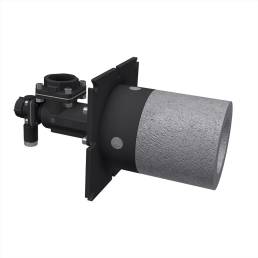
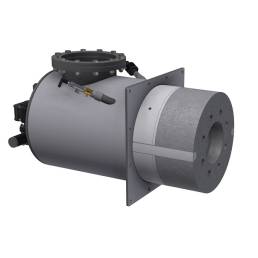
TF – Turn Flame – are oxy-fuel burners designed to be positioned on the furnace roof.
Their purpose is to evenly distribute heat within the chamber and across the surface of the load, avoiding the formation of hotspots.
What is referred to as “flame rotation” is actually the possibility to direct the flame through several (eight or more) nozzles arranged along the burner’s circumference, using a pneumatic valve system.
The technology can be controlled by a PLC.
TF – Turn flame oxy fuel burners reach very high temperatures thanks to the intense mixing of pure oxygen (technical purity grades from 90% to 99.9%) and gas at the nozzle.
Description
The ESA TF (“Turn Flame”) Series oxy‑fuel burners are engineered to generate a high‑temperature rotating flame produced through the intimate mixing of pure oxygen (90–99.9% technical purity) and fuel gas at the burner mouth. This rotating flame profile prevents the formation of hot spots inside the combustion chamber and on the material being heated, promoting uniform heat distribution and higher thermal efficiency in industrial heating processes.
These burners are widely used in metal melting furnaces, glass melting furnaces, ceramic frit melting, heating stations, and holding furnaces. With firing capacities ranging from 1000 kW to 5000 kW, the TF series operates on natural gas (CH₄) with minimum inlet pressures of 100 mbar for both oxygen and fuel gas. Their design ensures low CO and low NOx emissions when running under stoichiometric conditions, with NOx levels dependent on oxygen purity, process temperature, and combustion ratio settings.
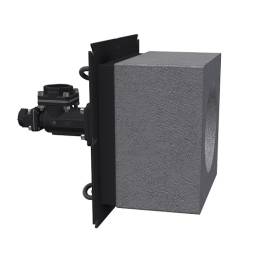
Constructed with an AISI310 stainless‑steel burner body and an Ersol50 refractory block, the TF burners withstand furnace temperatures up to 1750°C. Multiple fuel and oxygen lances operate selectively according to the thermal load required by the process, enabling an impressive 8:1 turndown ratio, far greater than achievable with traditional oxy‑fuel burners. The flame is inclined between 30° and 45°, and its rotation speed can be adjusted via software to match process demands. Ignition is performed by an air/gas pilot burner, and flame detection is ensured by a UV photocell.
The burners are typically installed on furnace roofs, though wall mounting is also possible. Proper installation requires a fiber‑ceramic mat around the refractory block to accommodate thermal expansion. Detailed procedures for installation, start‑up, calibration and maintenance ensure reliability, safety and optimal lifetime performance of the TF Series in demanding industrial environments.
Additional information
| Series | |
|---|---|
| Sectors | Aluminum, Copper |