

NM - Luminous flame burners “Nozzle Mix”
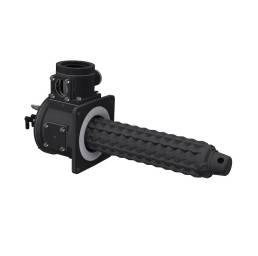
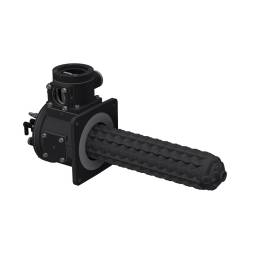
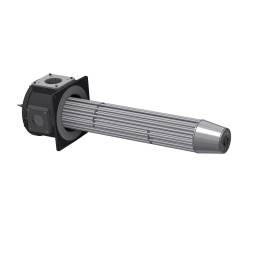
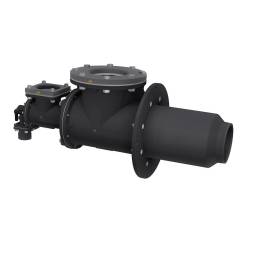
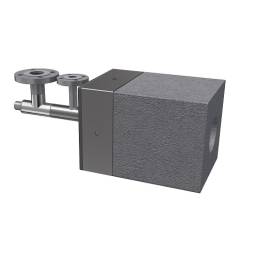
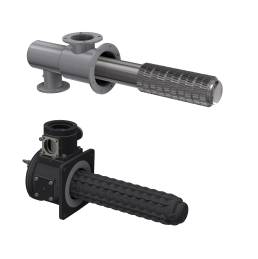
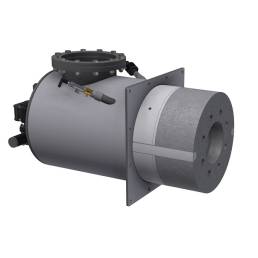
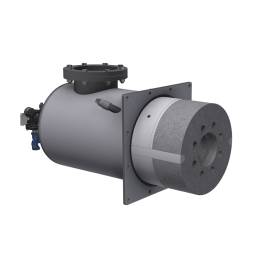
Nozzle Mix burners are high capacity bright flame burners. Gas and air are mixed only at the point of discharge. The airflow produces a negative vortex at the block mouth. The fuel enters the vortex mixing rapidly, resulting in intense combustion. These nozzle mixing burners can operate with both cold and preheated air.
Description
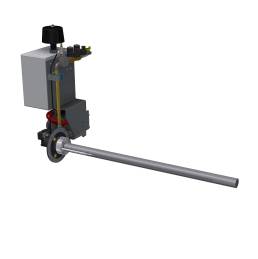
The NM Series is a family of Nozzle Mix luminous flame burners designed for industrial applications requiring high flame stability, fuel flexibility and robust thermal performance. The burners operate by passing combustion air through a dedicated mixer body, which entrains the fuel gas into the refractory block. Inside this block, complete mixing and combustion occur, producing a tense, very stable luminous flame—a hallmark of the NM burner design.
The NM burners can operate with ambient or preheated air up to 500°C, and they are compatible with various fuel gases. The product range spans an exceptionally wide capacity spectrum—from 10 kW to 17 MW—making the series suitable for both small‑scale and large‑scale industrial heating systems. Single‑nozzle versions offer a 10:1 turndown ratio, while multi‑nozzle models extend modulation capability up to 60:1, enabling highly flexible control over the heating process.
Typical applications include forging furnaces, billet reheating, aluminum melting, frit melting, air heaters, heat‑treatment furnaces, tempering and stress‑relief furnaces, brick kilns, dryers, and ladle/crucible heating, among others. The burners’ refractory block geometry ensures excellent flame retention and stability in all these environments.
Key construction materials include G25 cast‑iron for the mixing body and plate, AISI304 stainless steel for the air pipe, and a refractory block rated up to 1750°C. The burners are equipped with separate air and gas inlets, rotated freely by 90°, eliminating flashback risks. Threaded ports on the refractory block allow installation of accessories such as pilot burners, UV or electrode flame detectors, and observation windows.
Ignition typically occurs via PBC/PBST series pilot burners, with flame detection handled by UV photocells. Low‑power models also allow direct ignition via DSE or WAND electrodes. The system supports modulating combustion control through a motorized air valve and a zero‑governor on the gas line, ensuring the air‑to‑fuel ratio remains constant across the entire operating range.
Additional information
| Series | |
|---|---|
| Sectors | Process, RTO&Incineration, Steel |
Related products
- Downloadable files:
- CE Certificate
- EAC Declaration
- Bulletin