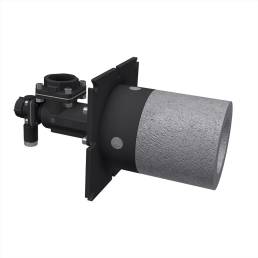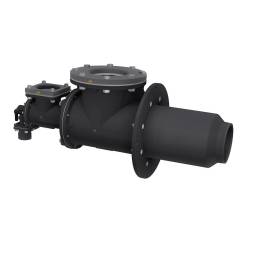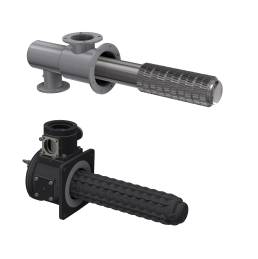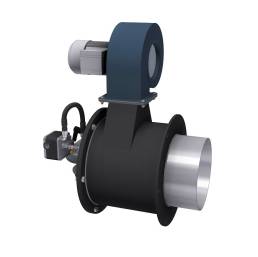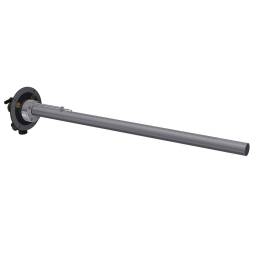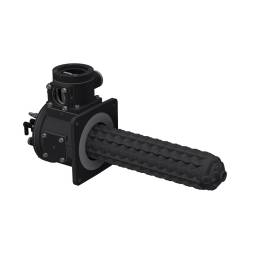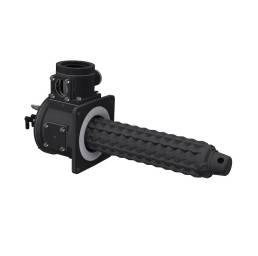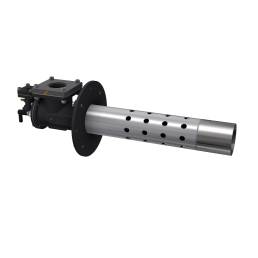


HT - High Turbulence Oxy Fuel Burner
The HT series oxygen-fuel burners are designed to generate an extremely compact and high temperature flame thanks to the intense mixing of pure oxygen (technical purity grades 90% – 99.9%) and gas at the mouth of the burner.
Description
The HT high turbulence oxy fuel burners series by ESA‑Pyronics is designed to generate an extremely flat, high‑turbulence flame through intense mixing of fuel gas and high‑purity oxygen (90–99.9%) directly at the burner mouth. This configuration enables very localized and efficient combustion, producing high flame temperatures suitable for specific high‑temperature industrial processes. Typical applications include melting tank furnaces for ceramic frits, metal melting furnaces, glass melting furnaces, and ladle‑heating stations in steel mills.
The burners cover a wide capacity range, from 10 to 5000 kW, and can operate with various gaseous fuels such as methane, LPG, and propane. Diesel or fuel‑oil supply is also available upon request. When used with refractory blocks, burners can reach furnace temperatures up to 1750°C. Oxygen inlet pressure must be at least 100 mbar, and the system operates with a 1:5 flow ratio. According to the combustion setup, CO emissions remain low at stoichiometric conditions, while NOx formation depends on oxygen purity, process temperature, and stoichiometric ratio.
The burner body is made of AISI 310/316 stainless steel, with optional AISI 316 water‑cooling jackets and refractory blocks resistant up to 1800°C. The flame develops outside the burner body to avoid backfiring phenomena typical of premix designs. Models vary in capacity, flame length (300–7000 mm), and flame speed (30–90 m/s), with ignition via spark electrode or pilot burner, and detection predominantly through UV scanners.
Installation requires proper sealing with ceramic fiber, correct alignment, and the use of flexible stainless‑steel hoses for oxygen and fuel supply. Rotatable inlets allow flexible piping layouts. Start‑up and adjustment procedures must be performed by qualified personnel and include verification of operating pressures, safety devices, ignition stability, and flame behavior.
Routine maintenance involves inspecting electrodes, cleaning UV scanner glass, verifying refractory block integrity, and periodically replacing oxygen/gas gaskets. Annual burner setting checks must be repeated to ensure long‑term safety and performance.
Additional information
| Series | |
|---|---|
| Sectors | Aluminum, Other metals, Steel |
Related products
- Downloadable files:
- CE Certification
- EAC Declaration
- Bulletin