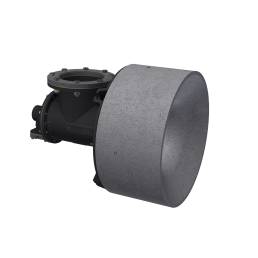


EXDF - Dual fuel burners
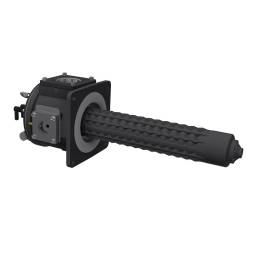
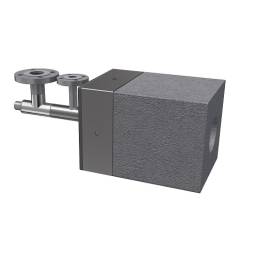
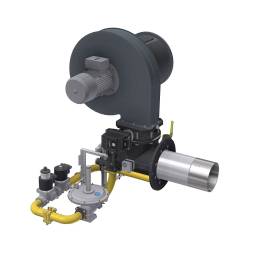
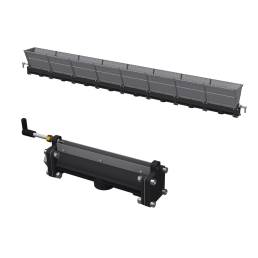
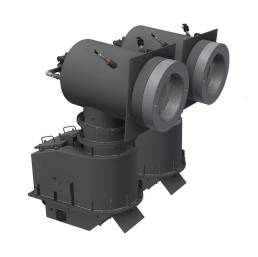
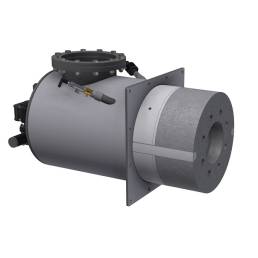
The EXDF burners are dual fuel, nozzle mixing, with refractory combustion head. They can burn all types of commercial non-corrosive gases and oils with a maximum viscosity of 3°E including biofuels. The fuel and the combustion air are mixed at the point of ignition inside the refractory cone, avoiding the danger of flashback. The characteristics of the refractory block allow excellent flame stability and remarkable flow ratio.
Description
The EXDF series consists of dual‑fuel nozzle‑mix burners equipped with refractory blocks, capable of operating with all commercial non‑corrosive gases and light oils up to 3°E viscosity. Air and fuel mix only at the point of ignition inside the refractory cone, eliminating backfire risk and ensuring stable combustion. These burners support both stoichiometric operation and excess‑air firing, maintaining flame stability across a wide turndown ratio: 8:1 with gas and 6:1 with oil.
They are suitable for many industrial applications including ceramic kilns, forging furnaces, annealing, reheating and melting furnaces, drying ovens, incinerators, polymer and resin treatment furnaces, and hot‑air generators. Burner capacities range from 100 to 1650 kW (oil) and 90 to 1450 kW (gas), with combustion air up to 450°C and supply pressures up to 70 mbar for air and gas and 2 bar for oil. Construction features include a cast‑iron G25 mixer and collector, cast‑iron plate, and AISI 304 fuel lance.
Ignition is performed either with a DSP electrode or a pilot burner (P64/P86), always followed by UV photocell detection as per ISO13577. Cooling lines are recommended for electrodes and photocells when installed on the refractory housing. Flame lengths, refractory‑block diameters, and outlet gas velocities are provided for each model; versions include M (medium‑speed flame, 50–60 m/s) and H (high‑speed, 80–90 m/s).
Performance tables detail maximum and minimum capacities for both gas and oil, including combustion‑air flow, pressures, oil flow, atomizing‑air requirements, and gas Δp values. Installation requires wall mounting with ceramic‑fiber insulation, flexible couplings for air and gas, and correct alignment of the burner block without protrusion into the furnace. Air/gas inlets can rotate 90° to fit plant layout.
Maintenance includes inspection of refractory blocks, photocell cleaning or replacement (every 10 000 h or 2 years), gasket replacement, burner tuning, and oil‑lance cleaning every six months. Transitioning between oil and gas requires mechanical repositioning of the oil lance and opening/closing of respective manual valves. Ordering codes allow selection of model, ignition system, gas adjuster, refractory‑block geometry (round/square), and alloy‑jacket options.
Additional information
| Series | |
|---|---|
| Sectors | Aluminum, Food, Glass&Ceramic, Heat treatments, Other metals, Process, RTO&Incineration, Steel |
Related products
- Downloadable files:
- CE Certification
- EAC Declaration
- Bulletin