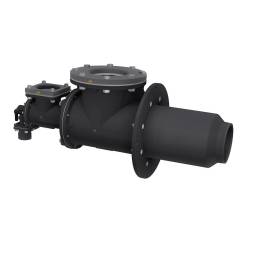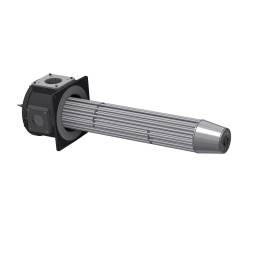


FC - Metallic cone monoblock burners
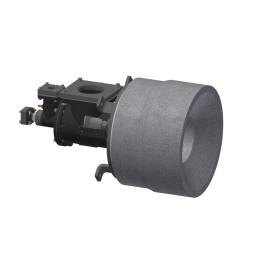
FC is a small, light, compact design burner with a metallic cone combustion head. They are used in low temperature processes and the combustion air is supplied via a fan mounted on the side of the burner body. The air flow has a fixed flow rate and the thermoregulation takes place with an excess of air, varying the gas flow rate.
Description
The FC burner series presented in this technical document describes a family of compact, metallic monoblock gas burners designed for low‑temperature industrial processes. These burners operate with a fixed airflow supplied by a side‑mounted blower, while gas modulation enables temperature regulation in excess‑air combustion conditions. Thanks to their lightweight construction and metal components—including a steel burner cone and stainless-steel nozzles—they are suitable for installations requiring easy handling, stable performance, and reliable operation.
Three models—FC‑5, FC‑10, and FC‑15—cover power capacities between 145 and 435 kW, with flame lengths ranging from approximately 600 to 1400 mm. All models deliver high flame stability, a wide turndown ratio, and safe separation of air and gas until discharge, avoiding backfiring. Typical applications include hot‑air and steam generators, dryers, incinerators, food‑cooking furnaces, and textile/dyeing equipment.
Ignition is carried out by a high‑voltage electrode, and flame detection can be achieved either by a similar electrode or by an optional UV‑2 sensor. The manual details flow charts for natural gas and LPG, showing performance data at various pressures. It also provides complete flow diagrams for on/off, dual‑stage, and modulating systems, specifying required components such as pressure switches, gas valves, regulators, safety solenoids, flame controls, and blowers.
Installation guidelines highlight correct burner positioning, gasket use, wiring of the motor terminals, grounding procedures, and precautions when using inverters. Operating instructions emphasize safe ignition, gradual transitions between minimum and maximum power, proper verification of gas pressures, and correct sequencing of safety devices.
The maintenance section covers both ordinary and extraordinary operations, including cleaning the quartz probe glass, replacing electrodes, checking gaskets, servicing the blower, and performing full burner recalibration. A recommended maintenance schedule is provided, along with dimensional drawings and ordering codes for all FC models.
Additional information
| Series | |
|---|---|
| Sectors | Food, Process |
Related products
- Downloadable files:
- CE Certificate
- EAC Declaration
- Bulletin