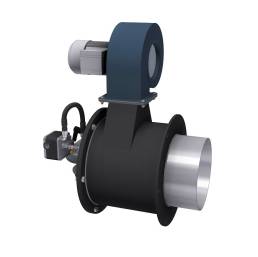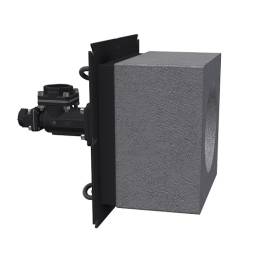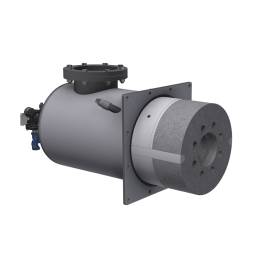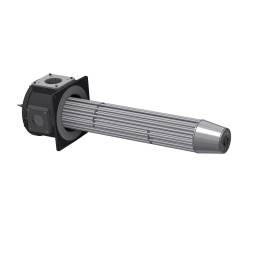


RAD-65 & RAD-120 - Radiant cone flame burners
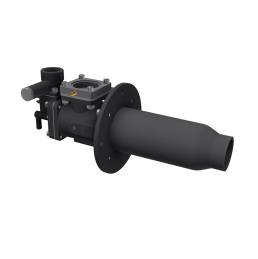
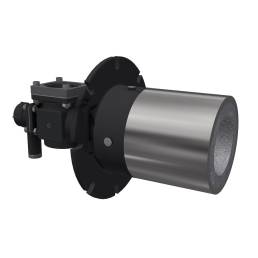
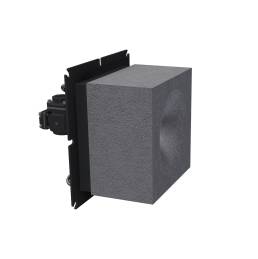
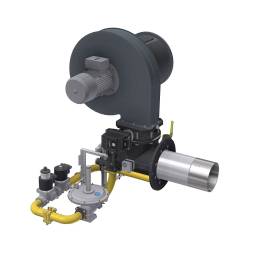
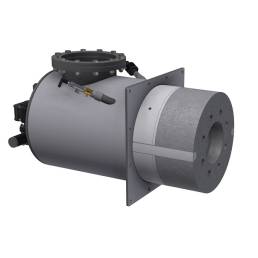
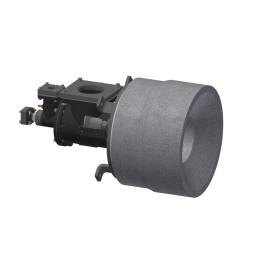
Radiant cone flame burners, model RAD-65 and RAD-120, are nozzle mix burners. Gas and air are mixed only at the point of discharge. High-velocity air flow produces a negative vortex at the refractory block mouth. Gas enters the vortex, mixing rapidly, producing intense combustion. The shape of the block and the vortex create a conic-shaped concentration. Cone temperatures are controlled by the percentage of excess air used.
Description
The RAD‑65 and RAD‑120 radiant cone flame burners are industrial nozzle‑mix gas burners engineered for high‑efficiency combustion, excellent flame stability, and suitability for various high‑temperature thermal processes. These burners mix gas and air only at the point of discharge, eliminating flashback risks and ensuring rapid, complete combustion. A high‑velocity airflow creates a negative vortex at the refractory block opening, drawing in the gas stream and forming a concentrated conical flame. The flame temperature can be regulated by adjusting the proportion of excess air, allowing precise process control across a wide operating range.
Structurally, the burners are built with robust, heat‑resistant materials: a G25 cast‑iron mixer body, iron WMF mounting plate, and AISI 310 stainless steel gas pipe. The refractory block withstands temperatures up to 1750°C, while the burners are compatible with preheated air up to 450°C. They operate using various fuels, including methane, propane, and LPG, and deliver capacities between 650 and 1200 kW. Their design ensures low NOx emissions and maintains flame stability under excess air, excess fuel, or ratio firing conditions.
Installation flexibility allows the burners to operate in any orientation. For wall mounting, WMF plates must be used. The furnace lining must leave sufficient space around the refractory block, later filled with ceramic fiber and protected with refractory concrete to compensate thermal expansion. For roof‑mounted applications, lifting eye bolts can be used. Air and gas connections follow Pyronics standards and can rotate by 90°, with flexible connectors recommended—essential when using preheated air.
Ignition is performed at low fire using the P86PBST pilot burner, which must be switched off after main flame establishment. Flame detection is typically achieved using a UV scanner, required when furnace temperatures are below 750°C. Flame characteristics range from 750–1000 mm (RAD‑65) to 1000–1500 mm (RAD‑120), depending on operating conditions.
Additional information
| Series | |
|---|---|
| Sectors | Aluminum |
Related products
- Downloadable files:
- CE Certification
- EAC Declaration
- Bulletin