

TBV-D & TBV-L - Motorized threaded butterfly valves
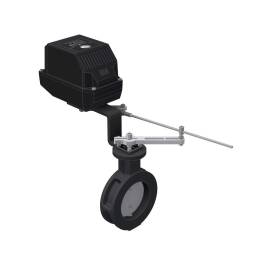
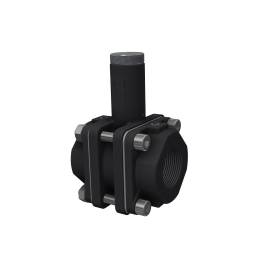
TBVs are non-sealing butterfly valves designed to quickly and accurately regulate air or fume flows in low pressure ducts. They are available in different configurations, manual or automatic.
Description
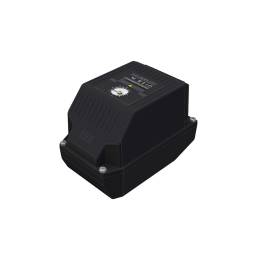
The TBV series is a family of non‑sealed motorized threaded butterfly valves designed for accurate and rapid control of air, preheated air, combustion gases, and fumes in low‑pressure industrial ducts. According to the manual, the valves are available in three main configurations: TBV‑M, featuring a manual lever with locked positioning; TBV‑D, directly connected to an electric or pneumatic actuator; and TBV‑L, equipped with a lever system that ensures high‑precision modulation, especially recommended for hot‑air applications due to improved mechanical control and thermal tolerance. The valves cover nominal sizes from Rp 3/4” to Rp 2”, with maximum operating temperatures up to 250 °C and pressure limits of 450 mbar at 60 °C, decreasing to 200 mbar at 250 °C.
The document includes detailed flow‑rate charts for air, natural gas, and LPG, as well as formulae that allow converting air‑based flow curves for other industrial gases. Graphs also support pipe velocity assessment, recommending maximum flow speeds below 30 m/s to limit noise and pressure drop. The manual provides instructions for selective valve sizing, highlighting the importance of considering Δp, gas density, temperature, and upstream pressure, especially when converting between actual and normalized flow rates.
Installation guidelines emphasize correct pipe alignment, avoiding excess sealant, maintaining straight pipe sections equal to at least twice the nominal diameter, and ensuring adequate spacing for actuator motion. When used with preheated air, the actuator and handle should be positioned laterally to improve heat dissipation. Calibration differs by model: TBV‑M uses a graduated scale on the handwheel; TBV‑D adjusts through actuator settings; TBV‑L requires coordinated tuning of levers, joints, and actuator stroke to achieve accurate minimum and maximum openings.
Maintenance recommendations include annual gasket verification, torque checks, movement inspection, and cleaning of internal components with non‑abrasive methods. The manual also stresses that TBV valves are not safety devices and cannot be used as fuel shut‑off systems under ISO13577. Dimensional tables and ordering codes complete the technical documentation.
Additional information
| Series | |
|---|---|
| Sectors | Aluminum, Food, Glass&Ceramic, Heat treatments, Other metals, Process, RTO&Incineration, Steel |
Related products
- Downloadable files:
- CE certificate
- EAC declaration
- Bulletin