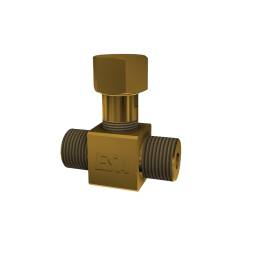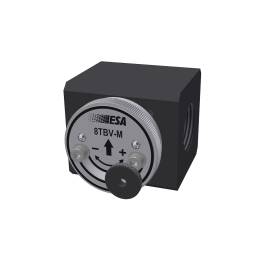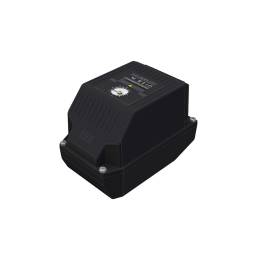


EBV - Flanged butterfly valves (motorized & manual)
The EBV series identifies non-sealing butterfly valves designed to quickly and accurately regulate cold or hot air or fume flows in low pressure ducts. They are available in different configurations, manual or automated by electric or pneumatic actuator
Description
The EBV series from ESA comprises a range of non -sealing flanged butterfly valves engineered for precise and rapid control of air, gas, hot air, or flue gas flows in low‑pressure ducts. Designed for industrial combustion installations, these valves are available in three configurations: EBV‑M with manual lever, EBV‑D for direct coupling with electric or pneumatic actuators, and EBV‑L, equipped with a system of levers suitable for high‑temperature applications, especially hot air.
Manufactured in cast iron with stainless-steel internals, the valves withstand operating pressures up to 450 mbar at 60°C and 200 mbar at 550°C, with maximum fluid temperatures reaching 550°C. Valve sizes range from DN50 to DN500, with a rotation angle of 0–90° and ISO5211 base connections. Flow charts and velocity diagrams are provided to facilitate sizing according to pressure drops, fluid type and temperature, and pipe velocity limitations (ESA recommends staying below 20 m/s).
The manual also details methods to calculate gas flow rates other than air, offering formulas and examples for converting between m³/h and Nm³/h considering gas density, temperature, pressure, and altitude. Guidelines for selecting the correct valve size based on pressure conditions and control requirements are included.
Installation instructions emphasize safety, correct flange alignment, bolt‑tightening sequences, and maintaining adequate spacing for heat dissipation. EBV valves are not safety shut‑off devices and must not be used for fuel interception. Calibration procedures are provided for all models, including actuator-based configurations with ESA SERIO motors (TPF, FLT, PRP).
Maintenance recommendations include periodic checks of gaskets, bolt tightening, valve movement, and calibration, along with guidance on component life expectancy. Finally, dimensional tables and ordering codes help configure each valve model with the required actuator and mounting accessories.
Additional information
| Series | |
|---|---|
| Sectors | Aluminum, Food, Glass&Ceramic, Heat treatments, Other metals, Process, RTO&Incineration, Steel |
Related products
- Downloadable files:
- CE certificate
- EAC declaration
- Bullettin