

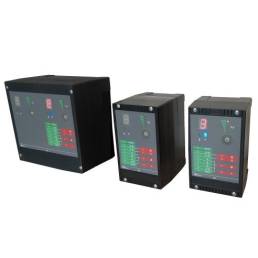
PLEX-PULSE - Pulse Firing controller
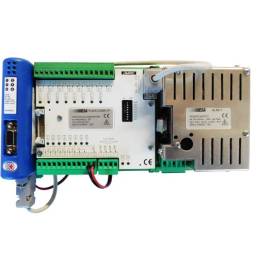
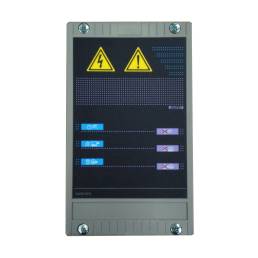
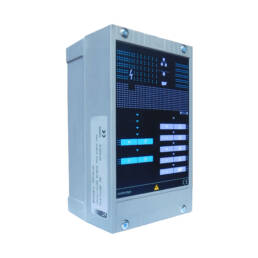
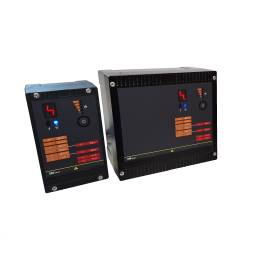
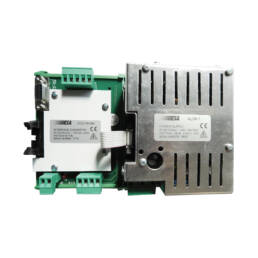
ESA PLEX-PULSE is a device used for pulse management of the burners controlled by ALBEN, ESTRO or REFLAM based on a percentage of power required to maintain the temperature. The device is intended to improve the performance and flexibility of your combustion system.
Description
The Pulse firing controller ESA PLEX‑PULSE is an advanced control device designed to manage pulse‑firing industrial gas burners, specifically those equipped with ESA ALBEn, ESTRO orREFLAM flame control units. Its purpose is to optimize heat‑treatment processes by improving temperature uniformity, system flexibility, and combustion efficiency. Installed inside an electrical panel, the system interfaces with supervisory devices (PLC, PC, DCS) through both digital I/O and analog inputs, while communicating with burner controls via the ECS bus.
The device can manage up to 64 burners divided into 4 zones, each with independent adjustment signals and control logic. Pulse firing is based on sequential time‑based modulation: burners alternate between minimum and maximum power, or between off and on, according to a requested power percentage. This method enhances convective airflow inside the furnace and reduces thermal gradients.
Five operating modes are available—OFF forcing, OFF‑MIN, OFF‑MAX, MIN‑MAX, and BOOSTER—each activated by configurable adjustment thresholds. Additional functions include pre‑purge, reset, minimum forcing, and heating/cooling mode control. Manual zone operation is possible for maintenance, with optional automatic shutdown after a configurable timeout.
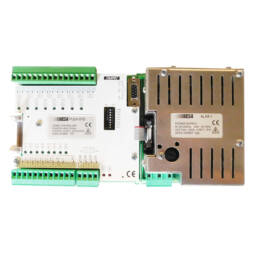
The ESA PLEX‑PULSE continuously supervises burner status, communication integrity, and ECS bus anomalies, providing dedicated diagnostic LEDs across modules: power supply (ALIM‑2), controller (CPU), digital I/O (D8IO), and analog input (A4I). Configuration includes hardware DIP‑switch settings and full software parameterization through the ELBP122 tool, allowing customization of baud rate, burner addresses, regulation thresholds, sequence order, and safety limits.
Installation requires compliance with electrical and safety standards, separation of power and communication wiring, correct grounding, and use of ECS‑certified cable. Maintenance procedures include regular inspections of cable integrity, led indications, conductor tightening, and verification of burner response.
Additional information
| Series | |
|---|---|
| Sectors | Aluminum, Food, Glass&Ceramic, Heat treatments, Other metals, Process, RTO&Incineration, Steel |
Related products
- Downloadable files:
- CE Certification
- EAC Declaration
- Bulletin