

C-2 & C-5 & C-6 & C-7 & VS & GVR - High voltage cables and connectors
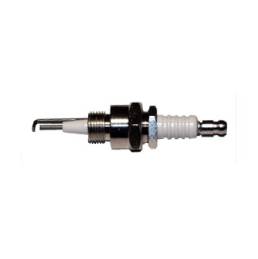
The connectors and special HV cables of the ESA range are accessories intended for use in high voltage (High Voltage). They are specifically used in the connection between ignition and detection electrodes of industrial burners and ignition and control devices.
Description
The C‑2, C‑5, C‑6, C‑7 connectors and the VS/GVR high‑voltage cables are ESA‑Pyronics accessories designed for ignition and flame‑detection systems in industrial burners. Their purpose is to provide safe, insulated, and reliable electrical connections between ignition electrodes, flame detectors, ignition transformers, and burner control devices. Their material quality and construction ensure stable performance even under harsh thermal and mechanical conditions.
These HV connectors differ mainly in insulation material, working temperature, and presence of EMC noise filters.
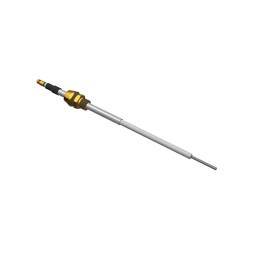
C‑2 is a ceramic connector suitable only for ignition electrodes, with a working range of –20°C to 300°C and no EMC filter.
C‑5 includes an EMC filter (1 kΩ), is made of Rynite, and works from –20°C to 150°C.
C‑6 and C‑7 are ceramic, both with EMC filters, clip/spring coupling options, and working ranges up to 250°C. All models withstand up to 20 kV and use self‑threading HV cable connections.
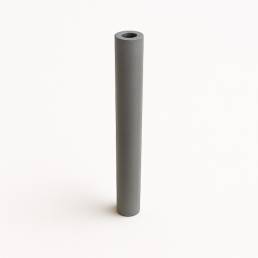
The VS and GVR HV cables are unipolar, silicone‑insulated, high‑temperature conductors designed for ignition and detection lines. VS cables handle up to 15 kV peak voltage and 220°C continuous operation, while GVR supports 12 kV and 180°C. Both feature fiberglass‑reinforced secondary insulation, good flame resistance, flexibility, and high dielectric strength.
Functionally, the connectors safely transmit the HV ignition discharge to the electrode and conduct the ionization signal back to the burner control. EMC‑filtered models mitigate electromagnetic disturbances generated by ignition sparks. Duty‑cycle performance depends on temperature and ignition current load.
Installation guidelines emphasize avoiding heat exposure, maintaining proper cable routing away from metallic masses, and ensuring correct mechanical coupling using the self‑tapping screw system. Cables must not exceed lengths permitted by the ignition transformer model. Safety warnings highlight the need to disconnect power before any intervention due to the dangerous high‑voltage levels present.
Maintenance includes periodic checks for insulation integrity, conductor fastening, and replacement of damaged cables or connectors following the prescribed procedures.
Additional information
| Series | |
|---|---|
| Sectors | Aluminum, Food, Glass&Ceramic, Heat treatments, Other metals, Process, RTO&Incineration, Steel |